Written by: Anand Sen; Reviewed by: Dr Vinod Kumar Jain
Your dog has a nasty rash on his leg. You are trying to explain to the vet on call: “red, a little swollen… may be patchy?”
As the vet doesn’t understand this panic-stricken description, he asks you for a photo. You send one, then another, and by the time you should’ve got the diagnosis, you are on a photo-sharing spree. The photos are Instagram-worthy but not clear enough for a digital diagnosis.
Now, to send a clear image, you’re adjusting the lighting, holding your dog still, zooming in and out, and wishing you had a jimmy jib, while your pet is uncomfortable and time is slipping away.
This is where you see delays in online vet consultation app. Not because the vets are slow, but because the information needed for accurate diagnosis is not enough.
To get a faster and more accurate diagnosis from an online vet consultation, you should upload well-lit photos that provide visual context, detail and scale, which are the three essentials in veterinary telemedicine.
This guide will help you learn what types of photos to upload to get quicker and more accurate help on a pet doctor app like Conbun.
Why Photo Quality Matters in Online Vet Consultations
At a physical vet clinic, a veterinary doctor uses temperature, touch, smell, and observation to diagnose.
But with online vet consultations?
Vision becomes the primary diagnostic tool.
According to the Open Veterinary Journal and the American Veterinary Medical Association, image quality directly influences diagnostic accuracy in remote consultations.
What Goes Wrong Most Often
- Blurry close-up shots
- No context (where is the issue?)
- Poor lighting
- Only one photo
- Bad photo quality due to a poor camera
Why It Matters
A poor image may lead to:
- A delayed diagnosis
- Unnecessary follow-up questions
- Potential misinterpretation of the issue, in turn leading to an inaccurate diagnosis
On the other hand, a good image leads to:
- Faster triage
- Better treatment plan
- Fewer back-and-forth messages
The 5 Essential Types of Photos You Must Upload
1. Establishing Shot (Context Image)
This is your “big picture.”
Start with a photo clearly showing the affected area in relation to the rest of your pet’s body, which allows the vet to identify the location.
A photo taken from 2–3 feet away showing the entire area (leg, ear, back).
Why it matters:
It shows the exact location and spread. A rash on one spot is different from a rash spreading across the body.
2. Close-Up Shot (Detailed Image)
Take a high-resolution, close-up shot of the rash, wound or symptom, ensuring it is in sharp focus.
Now zoom in.
This image should be a sharp one taken from 10–20 cm away.
Focus on showing the vet the:
- Texture
- Colour
- Edges
Why it matters:
This image is critical for diagnosis as it helps in identifying infection, allergy or injury.
3. Angled Shots (Texture & Elevation)
This is a comparison shot taken from multiple angles.
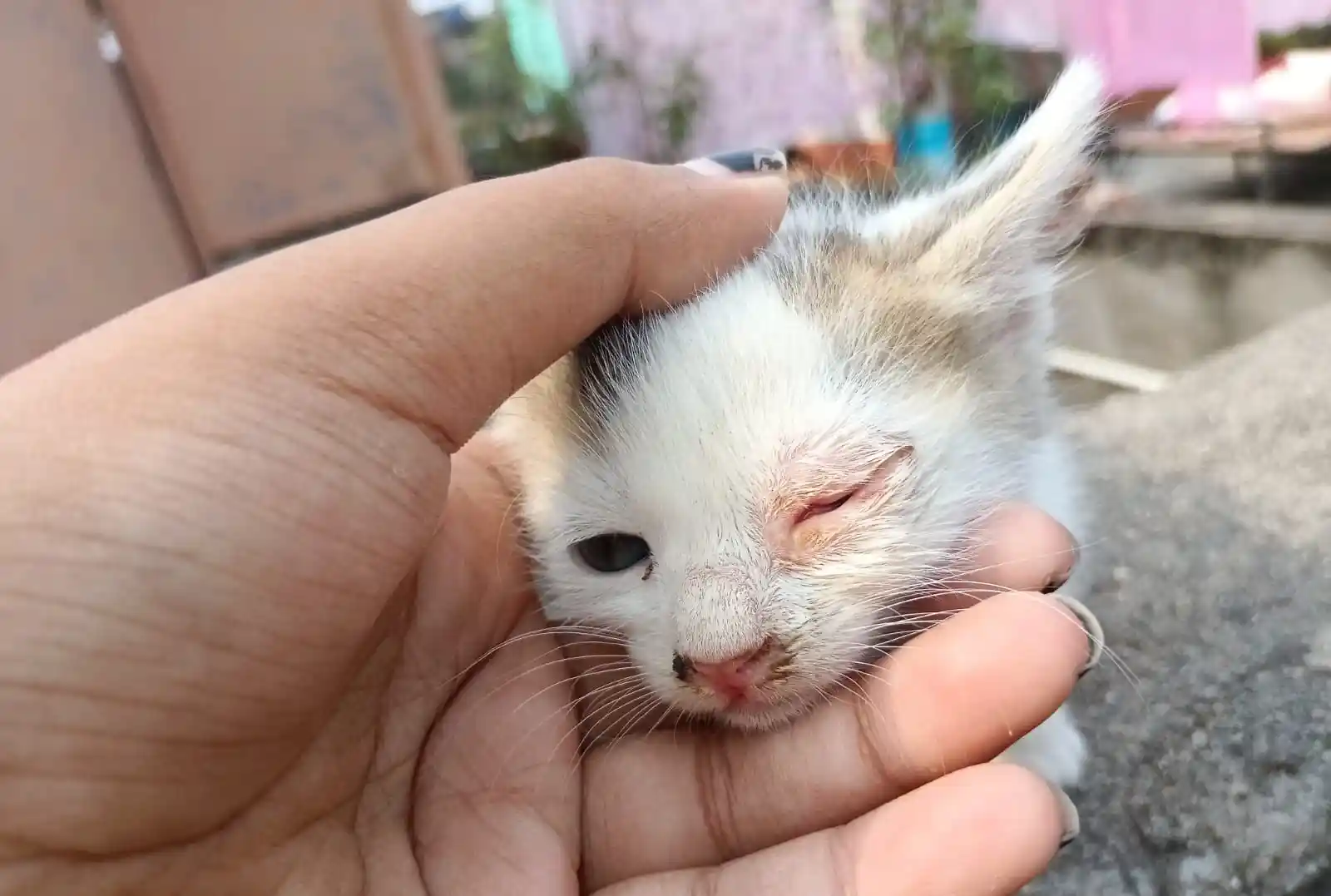
Straight photos flatten reality. If a spot is raised or uneven, take a side-on or oblique view to capture its depth and shape. If the issue is in an eye, limb or joint, take photos of both healthy and affected sides for comparison.
Take side-angle shots to show:
- Swelling
- Bumps
- Raised lesions
Why it matters:
Depth is crucial in digital diagnosis as it helps differentiate between surface irritation and internal clinical issues.
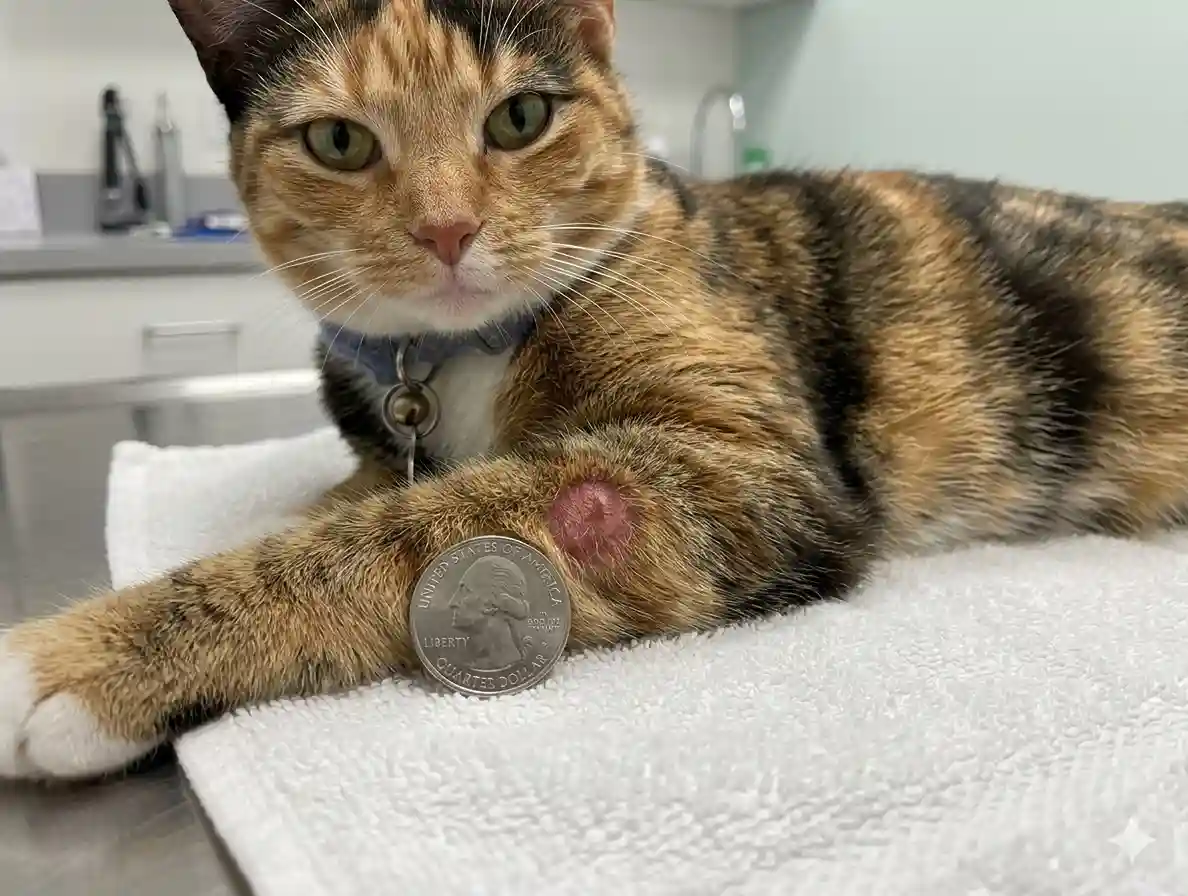
4. Scale Reference Image
Place something next to the affected area:
- coin
- ruler
- finger
Why it matters:
Size changes everything.
A 2 mm lesion vs a 2 cm swelling: completely different clinical interpretations. Pet owners may not be able to verbally describe the size of the issue. The idea of size could influence both diagnosis and treatment to a great extent.
5. Multiple Angles (Complete View)
Don’t just rely on one image.
Capture the issues from different sides to offer the vet a complete view:
- Front
- Side
- Slightly above
Especially important for:
- Joints
- Paws
- Skin conditions
Key Insight:
The more the details, the less the guessing.
Bonus: How to Take the Perfect Pet Photo (Quick Checklist)
- Avoid artificial lighting
- Transport your pet to a naturally well-lit area (near a window)
- Avoid flash glare
- Ensure that your camera lens is clean
- Keep your pet calm (use treats and praises if needed)
- Hold the camera steady. If you have a gimbal or a tripod, use them
- Record a short video to show movement like limping
A short 10-second video does better than 5 photos
Common Photo Mistakes That Delay Diagnosis
Even if you have good intentions, some mistakes during an online vet consultation can delay diagnosis.
Avoid These
- Too dark or overexposed images
- Only sending one photo
- Not sharing the context shot
- Moving while taking the photo
- Zoomed-in blurry pictures
- Obstructed view (fur, hand, shadow)
- Taking low-resolution photos
- Smartphone cameras adjust colours automatically, leading to colour distortions
Reality Check
Most delays in veterinary consultation online are not due to vet response time. They’re due to unclear inputs
When Photos Are Not Enough (Important Safety Note)
Photos are powerful, but not unlimited.
Do NOT rely on photos if your pet has:
- Difficulty breathing
- Seizures in dogs
- Severe bleeding
- Collapse or unconsciousness
- Emergency issues requiring immediate veterinary care
These cases require immediate in-clinic care
Role of Online Consultation
A veterinary doctor online consultation is best for:
- triage
- guidance
- early diagnosis
Not an emergency replacement.
How Conbun Uses Your Photos for Faster Diagnosis
On the Conbun app, your photos are not just viewed; they are clinically assessed.
What Happens After Upload
- Vet reviews context image
- Zooms into close-up details
- Compares angles for consistency
- Assesses size using reference
- Builds a clinical picture
Result
- Faster diagnosis
- More accurate treatment plan
- Reduced need for follow-ups
Better photos lead to better outcomes
FAQs (People Also Aksed)
Q.1 What kind of photos should I upload for my pet’s issue?
Answer: You should share well-lit photos from multiple angles, including context and close-up shots, for better diagnosis.
Q.2 Can a vet diagnose my pet only from photos?
Answer: Yes. Photos are an important diagnostic tool in veterinary telemedicine. For non-emergency cases, vets can easily diagnose your pet’s condition with high-resolution and clear photos.
Q.3 How many photos should I upload?
Answer: For an accurate diagnosis, you should share at least 3-5 photos, including context, close-up shots, angled and scaled images.
Q.4 What if my pet won’t stay still?
Answer: You can use treats or praises to ensure your pet is cooperative while you are taking pictures of the affected area.
Q.5 Are videos better than photos?
Answer: For cases involving movement, like limping, videos can help better. Photos generally offer more detail.
Conclusion
A good diagnosis doesn’t start with a prescription. It starts with clarity. And in the case of veterinary telemedicine, clarity starts at home. It begins with what you show.
Key takeaways
- Always send context, close-up and angled shots
- Use a scale reference to show size
- Capture photos from multiple angles
- Avoid blurry and poorly lit images
Because uploading the right photos saves you from stress and offers your pet the right care. So next, you open the Conbun app for an book online vet consultation, don’t just upload a photo, upload the right photo.
Author Bio: Anand Sen is an experienced content writer who, with a strong focus on pet health and preventive care, creates trustworthy, clear content. With an experience of more than 8 years in the content industry, he now works closely with veterinary professionals on the Conbun to translate clinical pet care insights and evidence-based guidance into practical advice so that pet parents can make informed decisions and care for their pets responsibly
_1_11zon.webp)
_4_11zon.webp)
Comments