Written by: Anand Sen; Reviewed by: Dr Vinod Kumar Jain
Priya was extremely happy that she brought her Persian kitten to her home from a breeder in Pune, thinking she had adopted the perfect, calm indoor cat.
But eight months later, the kitten had constant watery eyes, loud snoring, and was drinking water obsessively. The diagnosis? Early kidney disease and brachycephalic airway syndrome are two of the most common Persian cat health problems veterinarians see in India.
Persians are affectionate, beautiful and among the most popular cat breeds in India. But behind that fluffy coat and flat face are several breed-linked medical risks that worsen in India’s heat and humidity. Knowing what to watch for early can make a huge difference to your cat’s quality of life.
Why Persian Cats Get Sick More Than Other Breeds
Persians are a brachycephalic breed, meaning the shape of their skull is shortened and compressed. That cute little face that you adore comes with:
- Narrow nasal passages
- Crowded teeth
- Poor tear drainage
- Shallow eye sockets
These are not cosmetic quirks but structural problems that affect respiratory, eye, dental health, and overall comfort.
According to a study by the Royal Veterinary College, nearly 65% of Persian cats suffer from at least one inherited or chronic medical disorder due to their distinct physical traits.
India’s climate worsens many of these problems:
- Summer heat increases breathing stress
- Monsoon humidity promotes fungal skin disease
- Poor ventilation worsens eye and skin infections
Thus, Persian cat care in India requires much more than occasional grooming.
6 Common Persian Cat Health Problems in India
1. Polycystic Kidney Disease (PKD)
PKD is an inherited disease where fluid-filled cysts gradually damage the kidneys. It is one of the most common kidney diseases in cats, which eventually leads to kidney failure.
Among all Persian cat health problems, PKD is probably the most important one owner should understand early.
PKD develops slowly. Tiny cysts that form inside the kidneys gradually enlarge over time. As most Persians appear normal in the beginning, owners often miss these early warning signs.
Symptoms usually include:
- Increased thirst
- Weight loss
- Frequent urination
- Cat not eating
- Vomiting in later stages
- Lethargy
According to the Journal of Feline Medicine and Surgery early detection can dramatically improve long-term disease management.
For diagnosis of PKD in Persian cats, veterinarians usually recommend PKD genetic testing, kidney ultrasound screening and regular bloodwork monitoring.
There is no cure for PKD, but progression can often be slowed with:
- Kidney-supportive diets
- Hydration management
- Blood pressure control
- Regular monitoring
Self-medication is one of the common mistakes that pet owners make. They offer random supplements and “kidney tonics” found online, which may actually worsen electrolytic imbalance.
Excessive water intake must never be ignored in Persian cats.
2. Brachycephalic Airway Syndrome - Breathing Problems
Flat-faced cats may look adorable. Unfortunately, such cats face breathing difficulties due to this anatomy.
Persian cats often have:
- Narrow nostrils
- Elongated soft palate
- Restricted airflow
- Smaller upper airways
According to respiratory guidance from the American College of Veterinary Surgeons, brachycephalic animals are significantly more vulnerable to heat stress and respiratory issues.
In India, this becomes especially dangerous during:
- May and June heatwaves
- Humid monsoon weather
- Poorly ventilated apartments
Symptoms include:
- Loud snoring
- Open-mouth breathing
- Rapid breathing after activity
- Exercise intolerance
- Heat sensitivity
Important vet insight: Cats normally do not breathe through their mouths. If your Persian cat begins panting repeatedly, immediate veterinary evaluation is advised.
Brachycephaly in cats is deemed to be the direct result of selective breeding aimed at achieving an extreme, "flat-faced" aesthetic. It is not poor cat cross breeding but intentional human interference to produce specific physical traits.
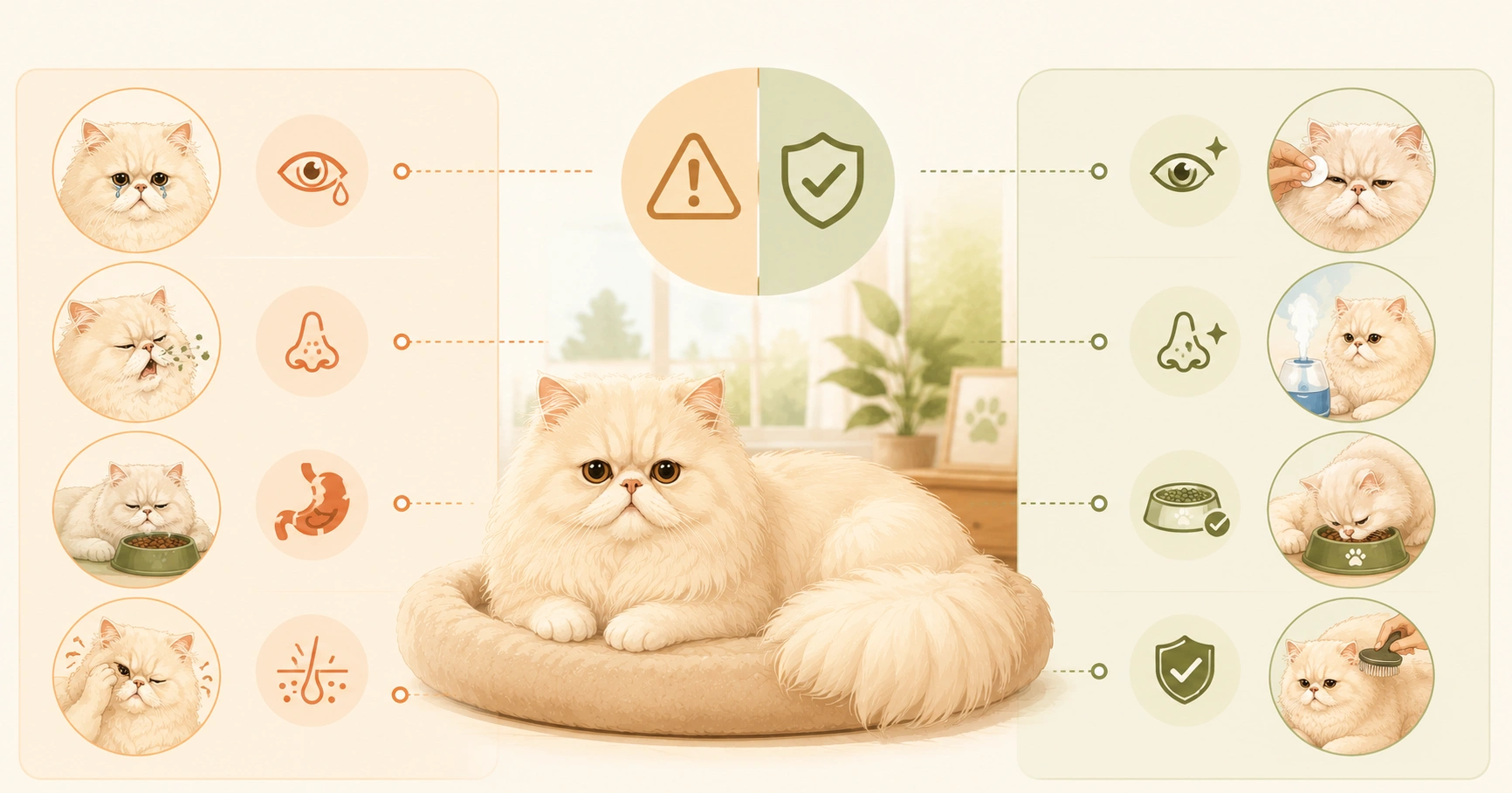
What genuinely helps:
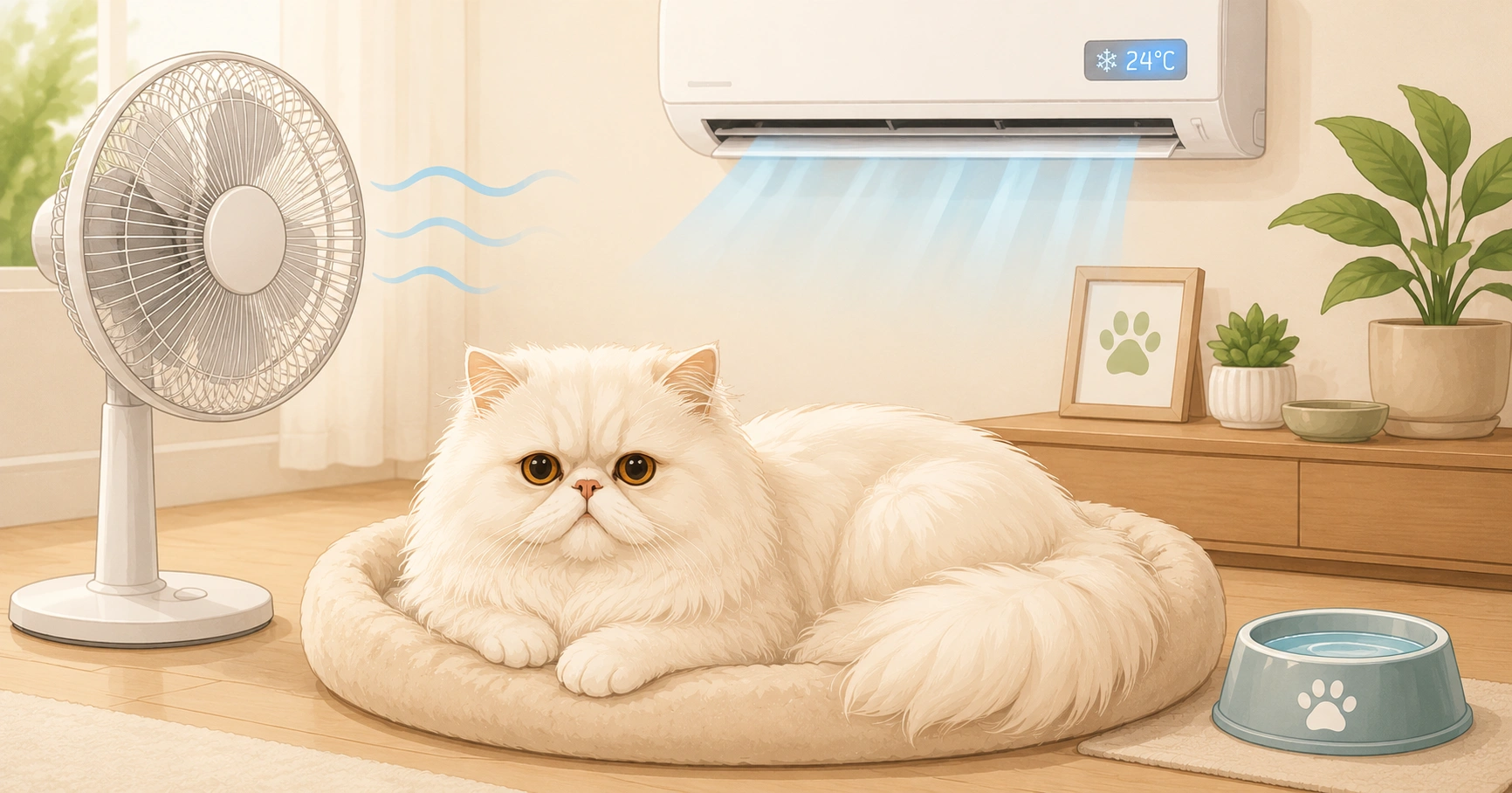
- Effective indoor air-conditioning
- Weight management
- Stress reduction
- Avoiding outdoor exposure in the heat
What does not help:
- Steam inhalation
- Human nasal sprays
- Ignoring symptoms until winter
Severe cases of Brachycephalic Syndrome require corrective surgery to improve airflow.
3. Persian Eye Problems
Persian cats and watery eyes go together almost universally. Their shallow eye sockets and poorly draining tear ducts cause tears to spill constantly onto the face instead of draining normally.
This leads to:
- Tear staining
- Facial skin irritation
- Bacterial overgrowth
- Chronic conjunctivitis
Daily eye cleaning is not cosmetic maintenance. It is preventive healthcare.
Common Persian eye issues include:
- Epiphora (tear overflow)
- Conjunctivitis
- Corneal ulcers
- Entropion
- Progressive retinal atrophy
As per the American College of Veterinary Ophthalmologists, corneal injuries may worsen rapidly in flat-faced animals because the eyes protrude outward more prominently.
Signs your pet needs a vet immediately:
- Green or yellow discharge
- Squinting
- Eye cloudiness
- Pawing at the eye
- One eye appears more closed
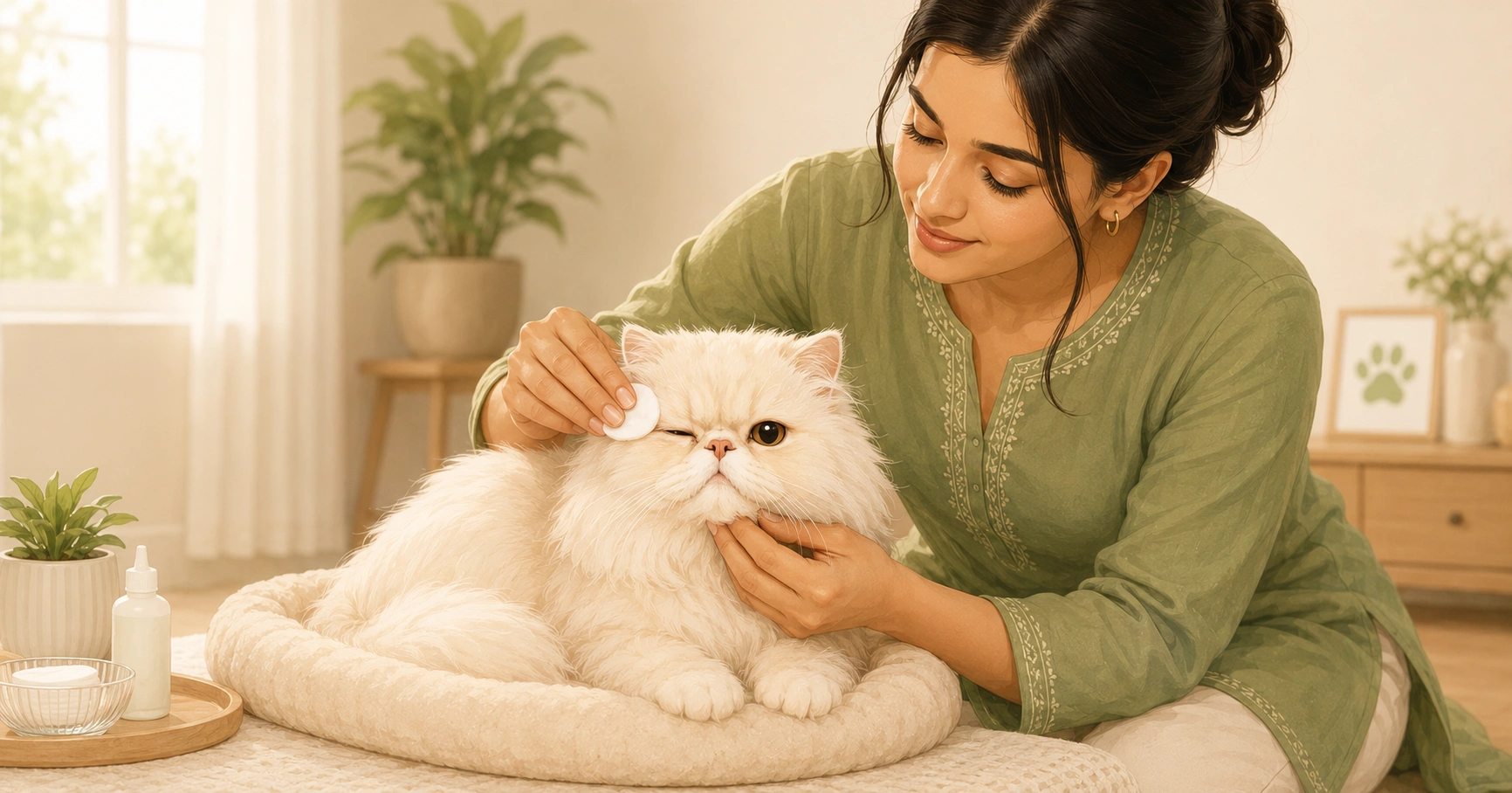
Daily care should include:
- Soft, damp cotton pads
- Gentle wiping from the inner corner outward
- Separate pads for each eye
Never reuse the same cotton pad between the eyes because infections spread easily.
4. Dental Disease
Persian cats often develop severe dental disease due to their compressed jaw structure, which may cause tooth crowding and plaque accumulation.
Oral health problems in cats are massively underestimated in India. Many owners think that bad breath is normal. But in reality, it is usually not.
Signs include:
- Strong mouth odour
- Drooling
- Reluctance to chew hard food
- Visible tartar
- Inflamed gums
According to an article published in Research in Veterinary Science, periodontal disease affects overall systemic health, including kidneys and heart function, if left untreated.
Helpful preventive habits:
- Brushing teeth 2–3 times weekly
- Dental-supportive diets
- Annual professional scaling
- Cat-safe toothpaste only
Advanced dental disease becomes painful surprisingly quickly in cats because they continue eating even while uncomfortable.
5. Skin and Coat Infections - India-Specific Risk
Persian cats have beautiful coats. They also have coats that trap moisture, dirt, fungal spores and skin oils. This becomes a major issue during the Indian monsoon season. Matting creates warm, damp pockets close to the skin, which leads to:
- Yeast infections
- Bacterial dermatitis
- Ringworm
Signs owners notice include:
- Hair loss patches
- Flaky skin
- Redness beneath the coat
- Excess scratching
- Foul smell
According to an article published in the Frontier in Veterinary Science, long-haired breeds require significantly more preventive grooming to reduce skin infections.
Daily brushing is not “optional” for Persians. It is non-negotiable. Persian cat owners should also consider professional grooming every 4–6 weeks, which also helps reduce matting and skin complications.
Ringworms in cats are one especially important concern that Persians are highly susceptible to. Circular bald patches should always be evaluated promptly.
6. Hypertrophic Cardiomyopathy (HCM)
Hypertrophic Cardiomyopathy (HCM) is the most common heart disease diagnosed in cats. It causes thickening of the heart muscle walls, making blood circulation less efficient over time.
Some Persian cats carry a genetic predisposition toward HCM, and unfortunately, there is no guaranteed prevention. Symptoms may include:
- Rapid breathing
- Weakness
- Sudden lethargy
- Reduced appetite
- Collapse in severe cases
The frightening thing about HCM is that some cats show almost no symptoms initially.
According to cardiology guidance from the American College of Veterinary Internal Medicine, early cardiac screening improves disease detection before advanced heart failure develops.
Veterinarians may recommend:
- Blood pressure checks
- Echocardiography
- Chest X-rays
- Cardiac ultrasound
Any Persian cat breathing rapidly while resting should be evaluated urgently. Cats hide heart disease exceptionally well until late stages.
Quick Reference: Symptoms vs Action
Symptom
Possible Problem
Recommended Action
Excessive water drinking
PKD
Vet visit within 48 hours
Loud snoring or breathing difficulty
Airway syndrome
Cooling + vet evaluation
Yellow eye discharge
Eye infection
Same-day vet visit
Bald circular skin patches
Ringworm
Vet within 24 hours
Bad breath and chewing difficulty
Dental disease
Dental examination
Rapid breathing at rest
HCM or respiratory distress
Emergency evaluation
When to Visit a Clinic vs. When Online Consultation WorksOnline veterinary consultations are useful for:
- Grooming guidance
- Diet advice
- Early symptom assessment
- Eye-cleaning routines
- Follow-up questions
But immediate clinic care is necessary for:
- Open-mouth breathing
- Eye injuries
- Refusal to eat for over 24 hours
- Collapse or severe weakness
- Suspected poisoning
In cities with limited feline specialists, veterinary teleconsultation often helps owners decide how urgently in-person diagnostics are needed.
Conclusion
Owning a Persian cat in India means balancing affection with attentive medical care. Their flat face, dense coat, and genetic predispositions make them more medically vulnerable than many other breeds.
But most Persian cat health problems become manageable when detected early. Daily grooming, regular veterinary screening, weight management, cooling during summer, and fast action when symptoms appear can dramatically improve both lifespan and comfort.
The goal is not perfection; it is consistency. And in Persian cats, small daily care habits often prevent much larger medical problems later. And if you face issues at any point in your pet parenting journey, turn to Conbun and book an online veterinary appointment to get your issues resolved.
References
American College of Veterinary Ophthalmologists. (2026). Understanding Brachycephalic Ocular Syndrome (BOS). Avco.org. https://www.acvo.org/tips-treatments-tricks/mmwsj4yzxeg5dfntxrxsz76rw3d88y
American College of Veterinary Surgeons. (2026). Brachycephalic Syndrome. https://www.acvs.org/small-animal/brachycephalic-syndrome/
Dos Santos, J. D. P., Cunha, E., Nunes, T., Tavares, L., & Oliveira, M. (2019). Relation between periodontal disease and systemic diseases in dogs. Research in veterinary science, 125, 136-140. https://www.sciencedirect.com/science/article/pii/S003452881930219X
McDonald, S. E., Sweeney, J., Niestat, L., & Doherty, C. (2022). Grooming-related concerns among companion animals: preliminary data on an overlooked topic and considerations for animals' access to health-related services. Frontiers in Veterinary Science, 9, 827348. https://www.frontiersin.org/journals/veterinary-science/articles/10.3389/fvets.2022.827348/pdf
Paepe, D., & Daminet, S. (2013). Feline CKD: diagnosis, staging and screening–what is recommended?. Journal of Feline Medicine and Surgery, 15(1_suppl), 15-27. https://pmc.ncbi.nlm.nih.gov/articles/PMC10816690/
Royal Veterinary College. (2026). Persian cats at high risk of health problems, study shows. Royal Veterinary College. https://www.rvc.ac.uk/vetcompass/news/persian-cats-at-high-risk-of-health-problems-study-shows
Comments