Businesses invest time in improving their Google Business Profile, website content, reviews, service information, and overall Local SEO presence. But completing SEO activities does not automatically mean performance is improving. A Local Rank Check provides a practical way to measure changes in local search visibility and understand whether important services are becoming easier for potential customers to discover.
Rather than looking at rankings as isolated numbers, businesses can use Local Rank Checks to compare performance over time and determine whether their local SEO strategy is moving in the right direction.
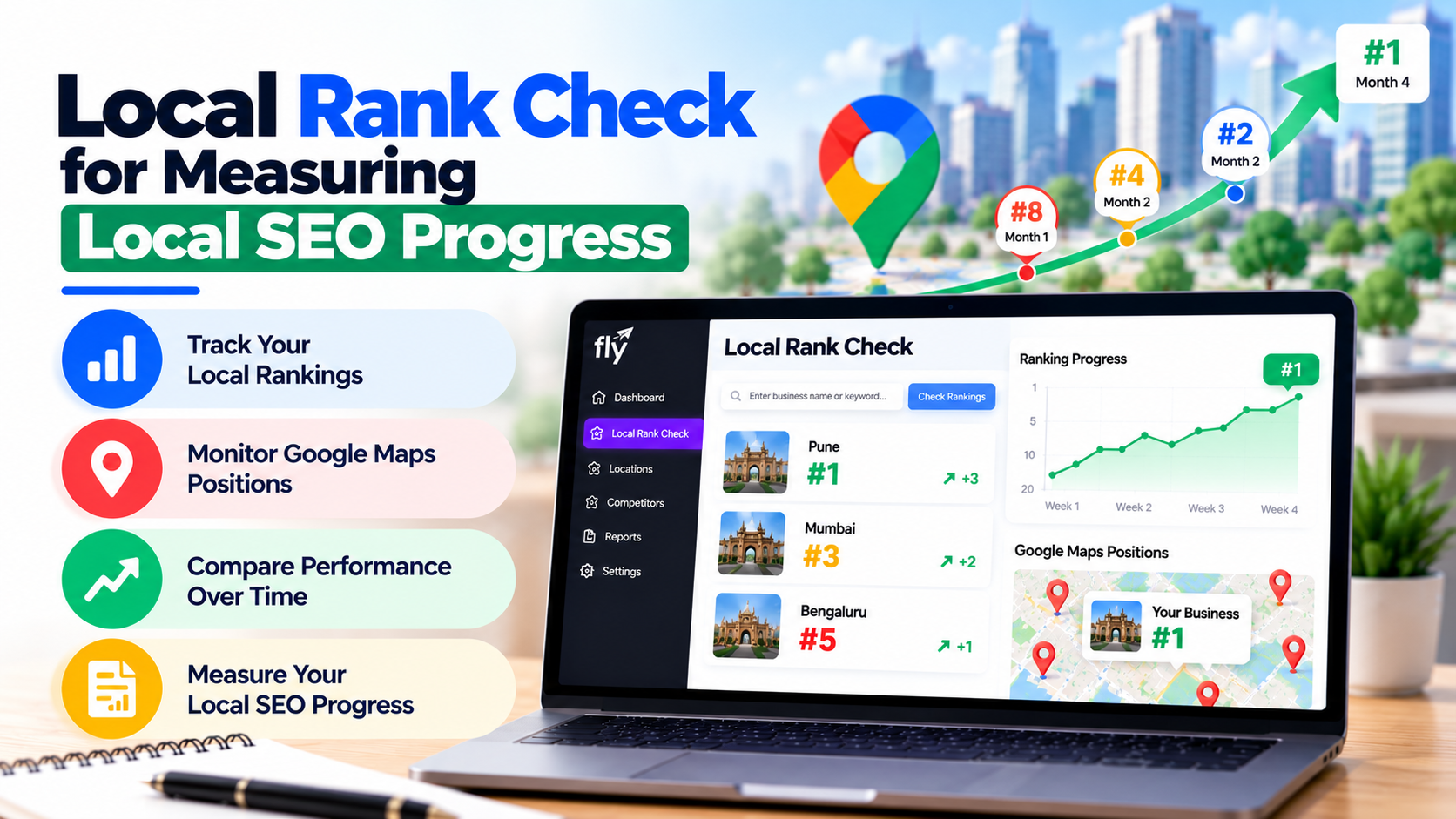
Establish a Starting Point for Local SEO
It is difficult to measure progress without knowing where you started.
Before making significant Local SEO improvements, businesses should establish a ranking baseline for searches that matter to them.
Choose keywords connected to important services and record the current visibility. This initial check creates a reference point for future comparisons.
After profile improvements, website updates, review activity, or other local SEO work, businesses can perform another check and compare the results.
This makes progress easier to evaluate than relying on assumptions such as "Our rankings seem better than before.”
Focus on Meaningful Ranking Improvements
Local SEO progress does not always mean moving directly to the first position.
A business with very limited visibility may show meaningful progress by starting to appear more consistently for relevant searches. Another business that already performs well may consider maintaining strong visibility a positive result.
This is why businesses should define progress according to their own starting position.
Look for improvements that matter, such as stronger visibility for an important service, better consistency, recovery from previous ranking losses, or continued visibility in a competitive market.
Progress should be realistic and connected to the business.
Measure Services That Matter Most
Tracking every possible keyword can make local SEO measurement unnecessarily complicated.
Instead, prioritise searches connected to valuable services.
If a business wants to grow a particular service, visibility for searches related to that service deserves closer attention.
This provides a clearer way to evaluate whether local SEO efforts are supporting actual growth priorities.
Businesses can also track different services separately.
One service may already have established search visibility while another may still be developing. Looking at them individually prevents strong performance in one area from hiding weak performance elsewhere.
Look at the Bigger Ranking Pattern.
A common mistake is judging local SEO progress by looking only at the best ranking position.
Imagine a business that already has one strong position but limited visibility elsewhere. After several months of SEO work, the best position remains unchanged, but many weaker positions improve.
If the business looks only at its highest ranking, it may conclude that no progress was made.
The broader visibility pattern tells a different story.
This is why Local Rank Checks can provide more context than simply recording one position.
Businesses should look for improvements in overall visibility rather than expecting every search to reach the top.
Compare SEO Work With Ranking Progress
Keeping a simple record of important SEO changes can make ranking reports more meaningful.
Note when major Google Business Profile improvements are completed, important service pages are updated, or other significant local SEO work takes place.
Future local rank checks can then be reviewed alongside this timeline.
This does not mean one particular change should receive full credit for a ranking improvement. Local search performance can be influenced by several factors.
However, having a record of what changed helps businesses and agencies understand the broader relationship between SEO activity and visibility.
Identify When Progress Has Slowed
Local rank checks are also useful when rankings are not improving.
Suppose a business has been working consistently on local SEO, but an important service continues to show limited visibility.
Instead of continuing to make random changes, investigate why.
Review the Google Business Profile, website content, business information, customer reviews, service pages, and competitive environment.
Businesses can also use Fly's other SEO and Local SEO tools to examine different areas of their online presence.
The purpose is to find potential weaknesses before deciding what SEO work should happen next.
Avoid Measuring Local SEO Too Quickly
SEO progress should not be judged immediately after every small change.
Rankings can move, and individual checks may not represent a meaningful trend.
Businesses should give improvements enough time to be evaluated and compare results over sensible periods.
One positive ranking movement does not necessarily prove long-term success. Similarly, one weaker result does not automatically mean the strategy has failed.
Look for direction.
Are important searches gradually becoming more visible? Is performance remaining stable? Is visibility consistently weakening?
Longer-term patterns provide better information than isolated movements.
Make Client Reporting More Meaningful
Local rank checks can also help agencies communicate local SEO progress more clearly.
Clients may receive reports containing completed tasks such as profile updates, content changes, review management, and website optimisation.
But clients ultimately want to understand what those activities are achieving.
Showing changes in search visibility can make reporting easier to understand.
An agency can explain where the client started, which searches have improved, where visibility remains stable, and what still needs attention.
This turns reporting into a conversation about performance and future priorities rather than simply a list of completed tasks.
Connect Ranking Progress With Business Performance
Improved search visibility is valuable because it can create more opportunities for potential customers to discover a business.
But rankings should not be the final measurement.
Businesses should also review what happens after visibility improves.
Are more people visiting the website? Are relevant enquiries increasing? Are customers calling, requesting directions, booking appointments, or completing other useful actions?
If rankings improve but customer response remains weak, another part of the journey may need attention.
The Google Business Profile, reviews, website experience, service information, or contact process could be limiting conversions.
Measure Progress That Matters
The real purpose of a local rank check is not to produce another SEO report.
It is to help businesses answer a more important question:
Is our local SEO creating meaningful improvement?
By establishing a baseline, tracking valuable services, comparing broader visibility patterns, reviewing progress over time, and connecting rankings with customer actions, businesses can build a clearer picture of their local SEO performance.
The goal is not simply to improve every ranking number.
The goal is to become more visible for the searches that matter and turn that visibility into opportunities for real business growth.
Comments